Welcome to our 1st Antarctica Field Blog update for this, the 49th season of the Erebus Bay, Antarctica Weddell Seal Population Study! More info and videos on the study at WeddellSealScience.com.
An advance field team of three Weddell seal population study crew members traveled through Christchurch, New Zealand, where they were issued their Extreme Cold Weather (ECW) clothing gear for the Austral Spring season in Antarctica.

The advance field team is now on the ice, including Shane, Thomas, and Montana State University M.S. student and co-crew leader Kaitlin Macdonald. Our thanks to Kaitlin for today's update and great photos!
Kaitlin reports that the advance team of crew members all arrived safely at the U.S. Antarctic base, McMurdo Station. She notes this morning that since their arrival in Antarctica, "We have mostly been training the past few days…." Here is a photo of the advance field team of Shane, Thomas, and Kaitlin on the sea ice runway after arriving outside McMurdo Station…

They flew in from Christchurch, New Zealand on an Airbus!

The team then took a Delta for the drive to McMurdo Station where they will begin preparing the equipment and huts for assembling the remote sea ice camp they'll live at and work from for the next two months plus. In the photo below, crew members Shane and Thomas are loading gear into the back of the Delta for the trip into town.

The advance team is arriving for the season a bit earlier than in recent years to begin getting the camp ready. The rest of the Antarctica field team will arrive in early October for the beginning of the Erebus Bay Weddell seal pupping season.
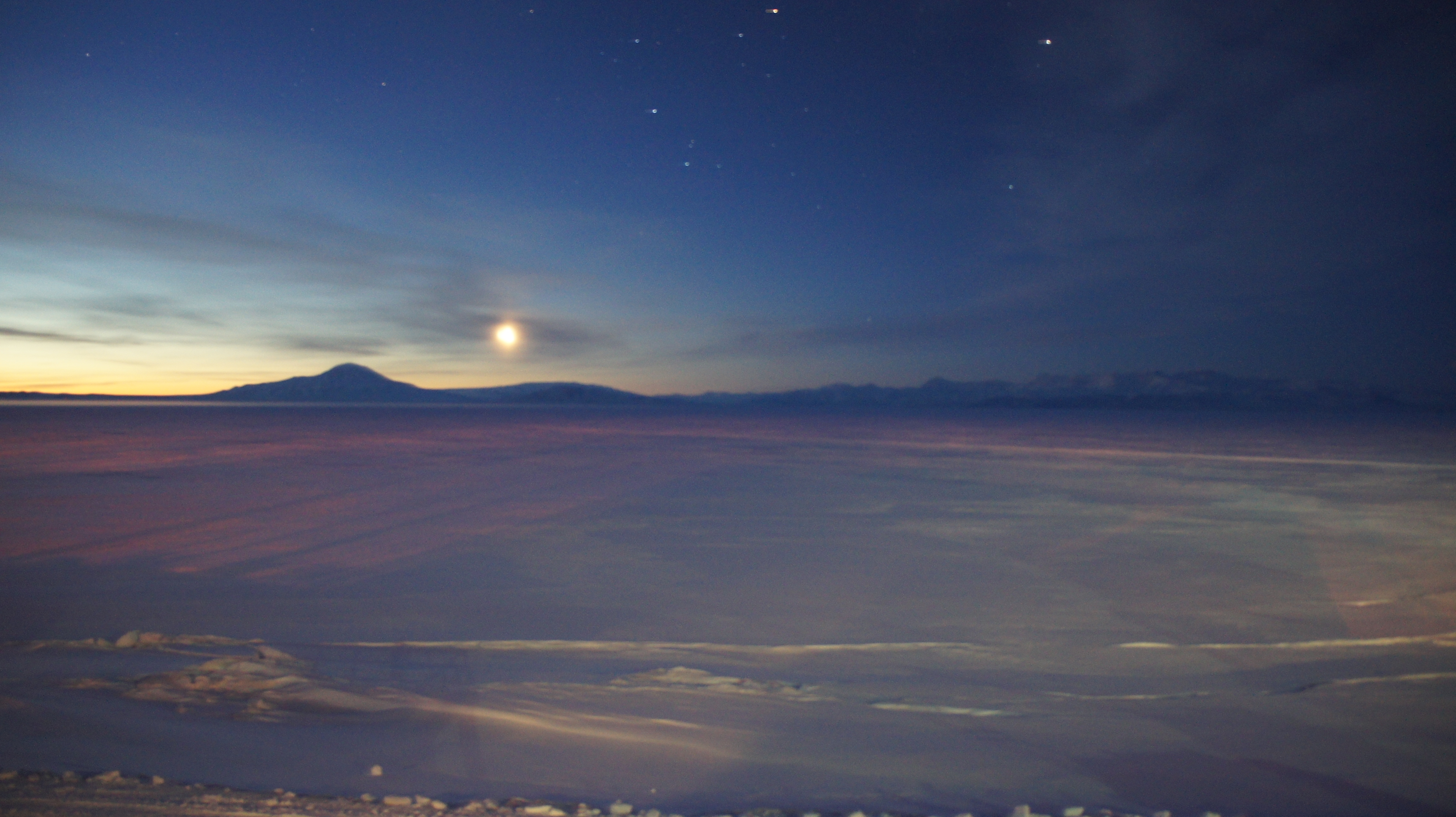
Of this gorgeous photo below, Kaitlin says, "I pried myself out of bed at 2 am to get a shot of the moon and stars over Mt. Discovery." Thank you, Kaitlin!
Leave a Reply