This season's sea ice conditions are a bit unusual, even considering the year to year variation in Austral Spring sea ice conditions in the Erebus Bay Weddell seal study area. The Weddell seal population study field team spends a lot of time at the beginning of the field season assessing and flagging safe routes to the various seal pupping colonies. In this photo, "Kit and Victor are profiling a crack near Turtle Rock to see if it is a safe location to put in a road crossing," reports field crew leader Shane Petch.

When the field team encounters a crack in the sea ice they carefully dig around it to expose its extent. They use small drills to determine the sea ice thickness surrounding the crack. The U.S. Antarctica Program has very strict safety guidelines when it comes to assessing and crossing cracks in the sea ice. In appropriate places special bridges can even be set to allow safe crossing.
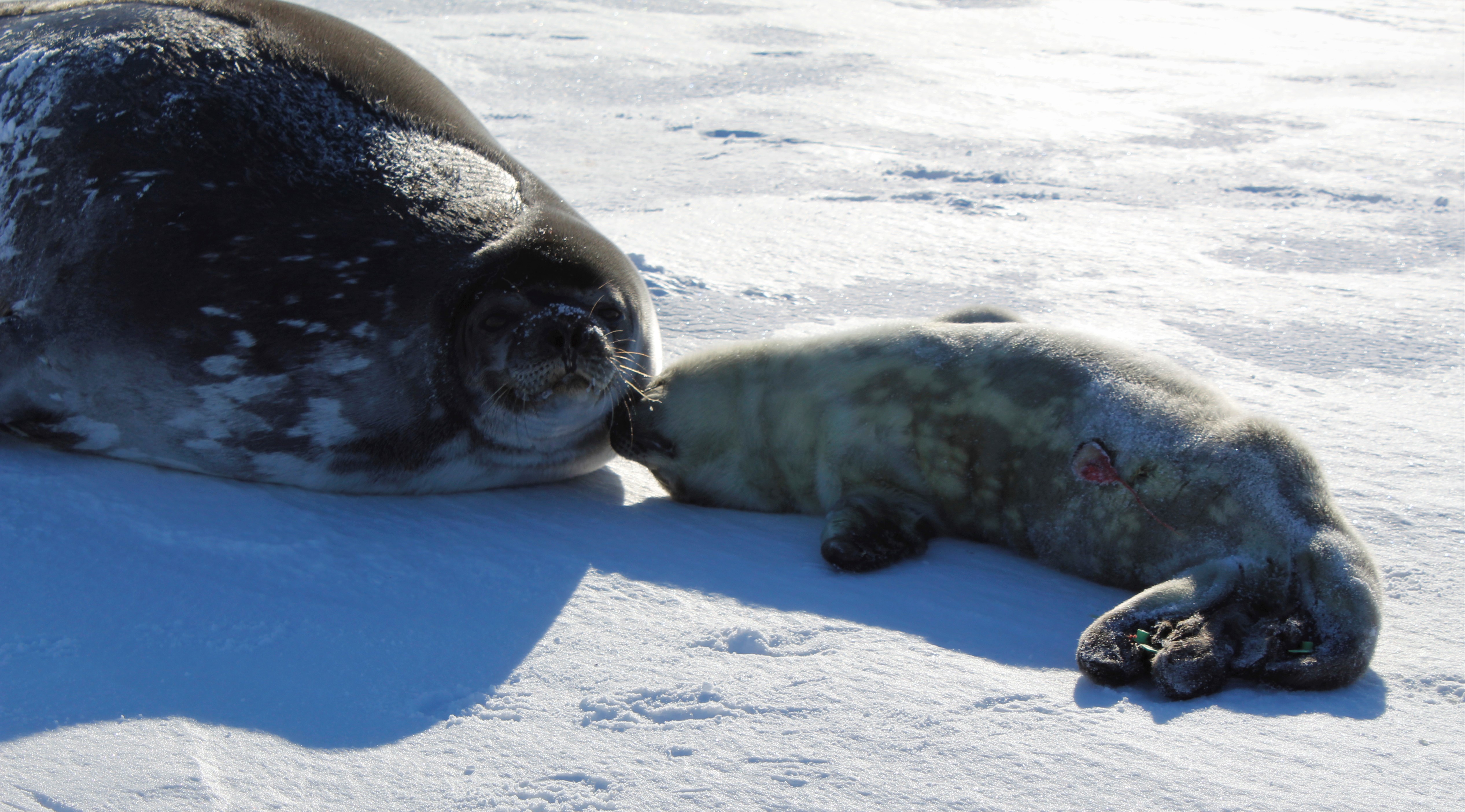
Once the field team has carefully determined safe routes to the various seal pupping colonies, they will then flag the routes to ensure safe travel. These safe flagged routes will allow the team to access the pupping colonies to record, tag, and follow new pups born in the study area. The photo below is of the first Weddell seal pup born in the study area this season to be recorded along with its mom and given a unique identification tag.

Weddell moms will stay close to their pups throughout the approximately 45 day nursing period. Close contact, nursing, and nuzzling help the mom/pup pair bond during the early days of the new pup's life. More about the life and activities of Weddell moms and pups in a future post!
– Mary Lynn Price
Leave a Reply